
Photos + Text by Samantha Katz
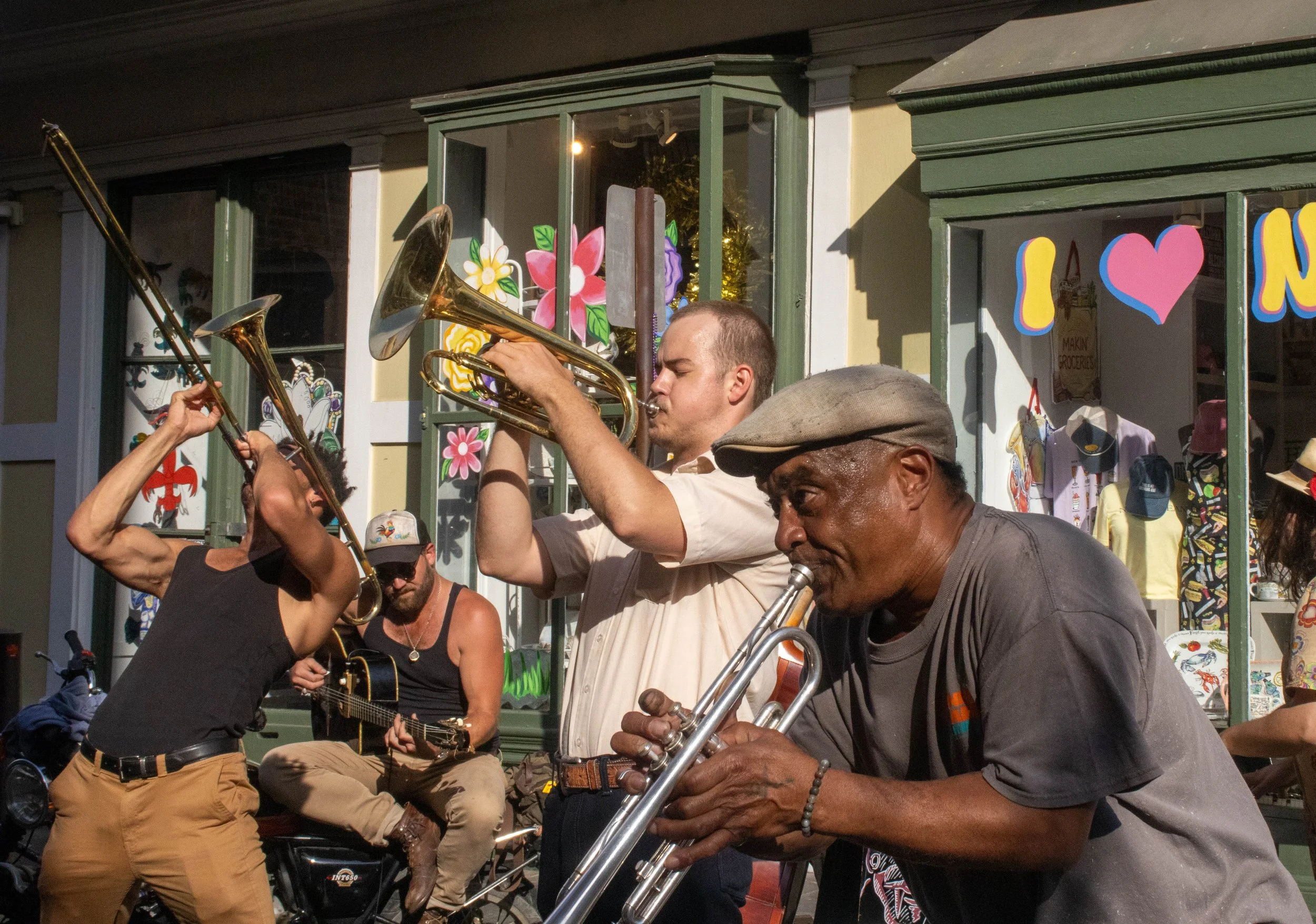
Reece Ashley, Benjamin Morren, and Jimbo Lockhart (L-R) of the Dirty Rotten Vipers play together on Royal Street in New Orleans’ French Quarter on April 1, 2026.
Music has been coming out of the French Quarter since the 18th century, with second line celebrations leading brass band parades through the streets of New Orleans. Louis Armstrong got his start busking here at the age of 11, playing the cornet. Trombone Shorty starting off playing in Jackson Square. So many icons have emerged from New Orleans' busking culture. But what about the people whose goal is street performance? Who has been there for thirty years, in the same corner and with the same instruments? The streets have become the city’s truest stage.
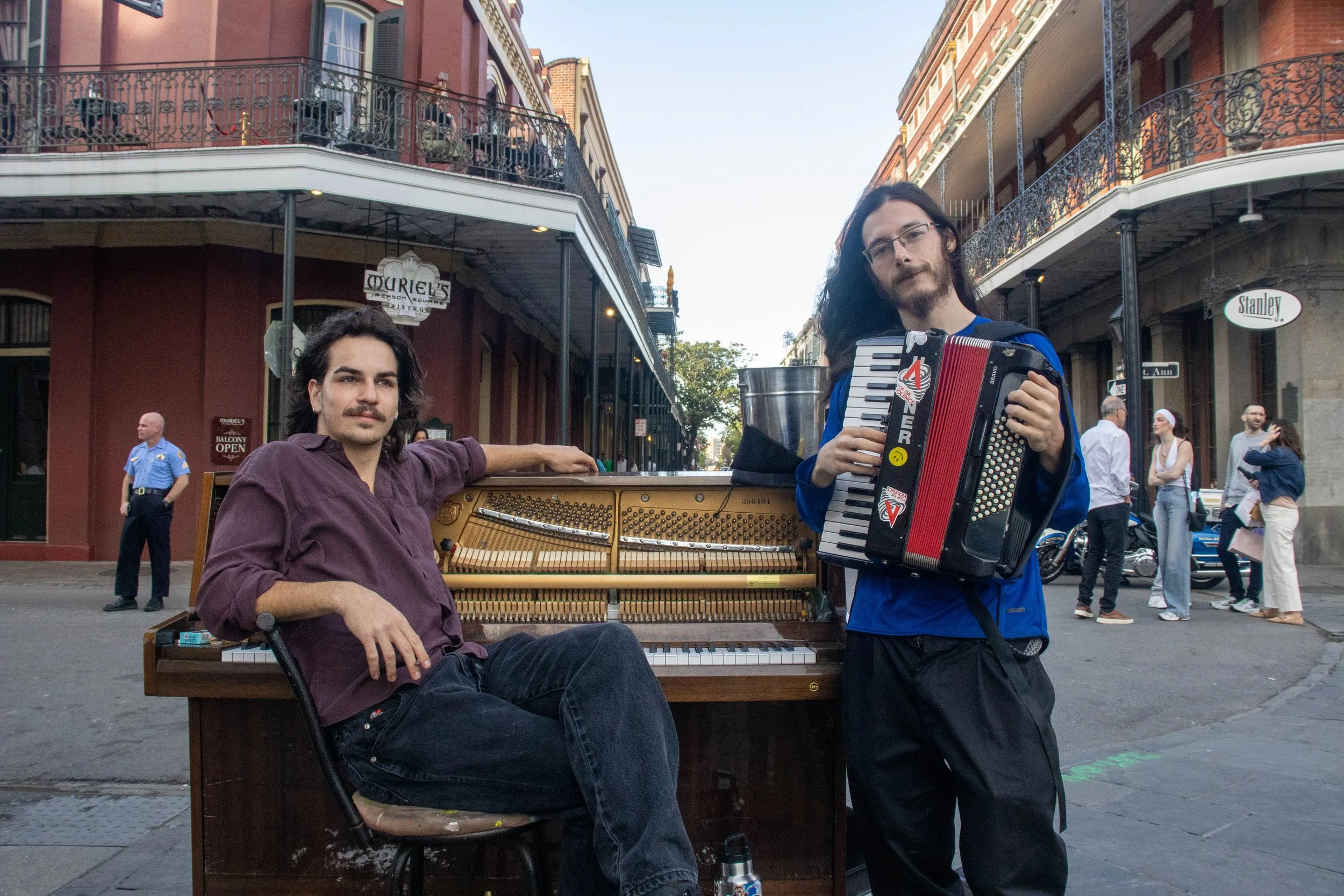
The band Rat Fever sets up on Chartres Street in the French Quarter on April 10, 2026.
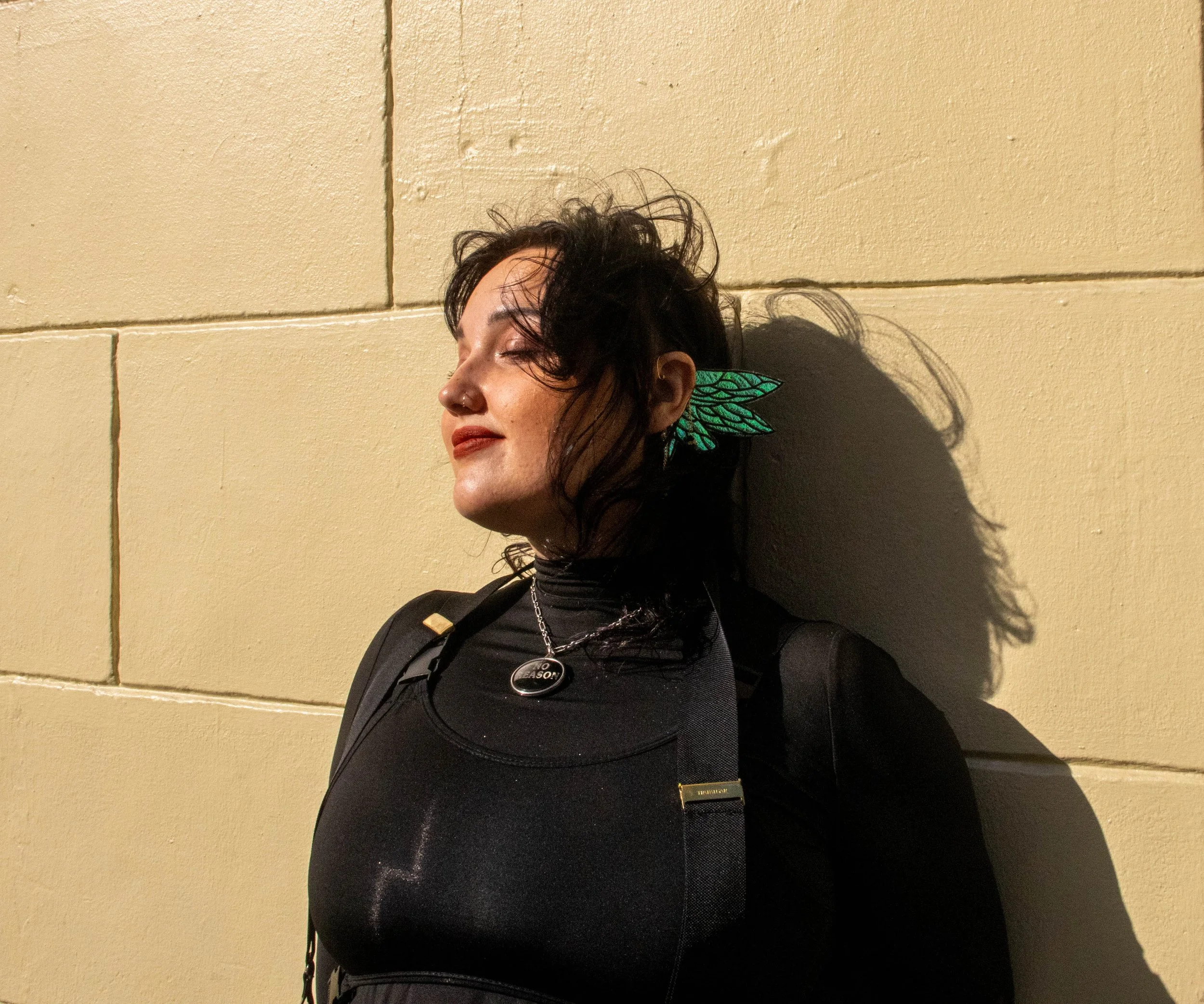
Elysium leans against a wall in the late afternoon sun on Royal Street on April 1, 2026.
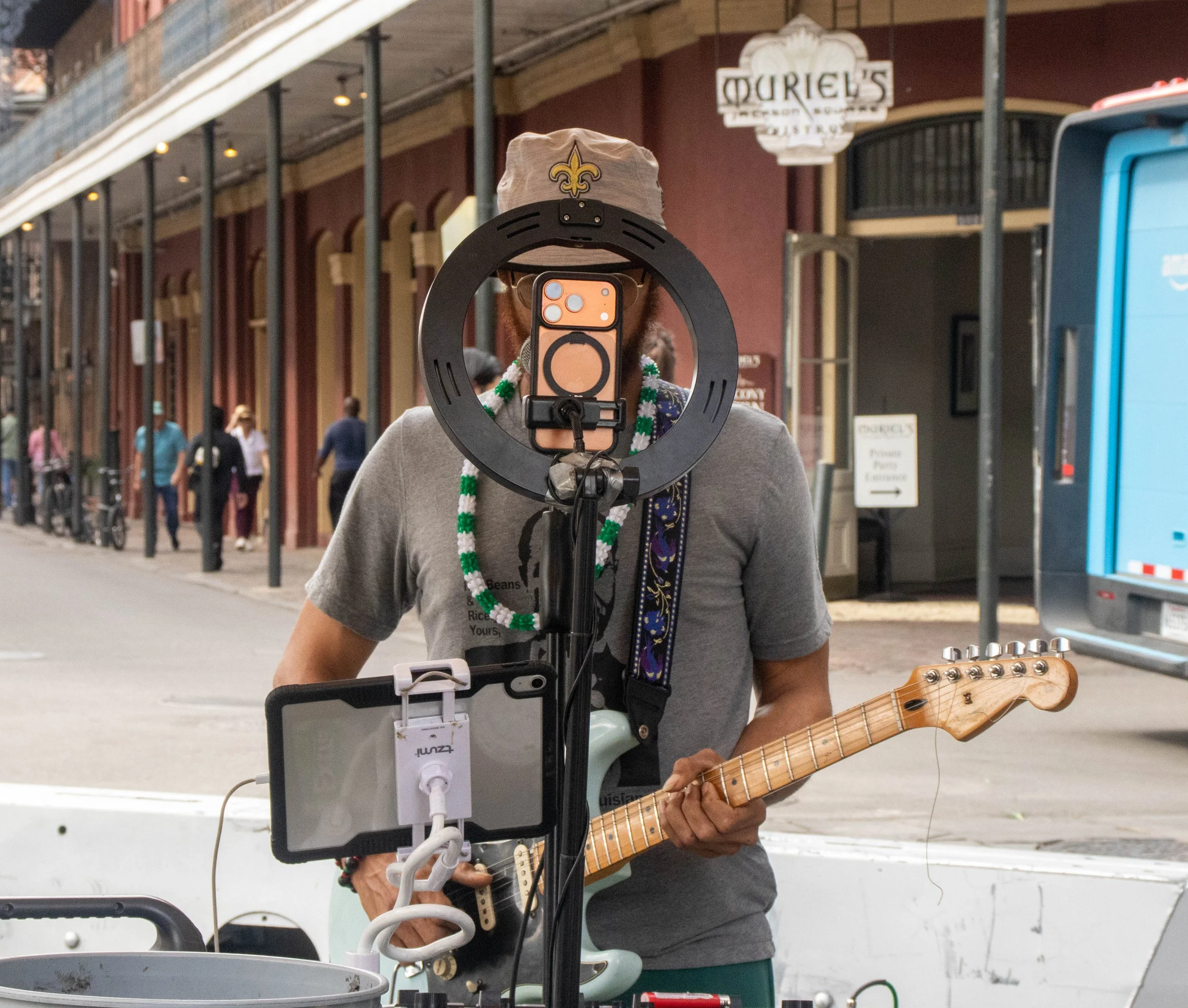
Isiah-Da-Artist performs on the edge of Jackson Square on March 15, 2026, while also streaming on TikTok LIVE.
This story follows Elysium, Gabriel Paul, and other French Quarter street performers whom I met out on the street, examining their experience and daily practices. Gabriel Paul, for example, took me scouting for a spot to perform, as he rolled his heavy gear in a wagon. We went through Jackson Square and the riverfront, eventually landing on a corner on Royal Street. I watched from his perspective, his eyes focused on the MIDI keyboard as tourists walked past, sometimes taking a quick video.
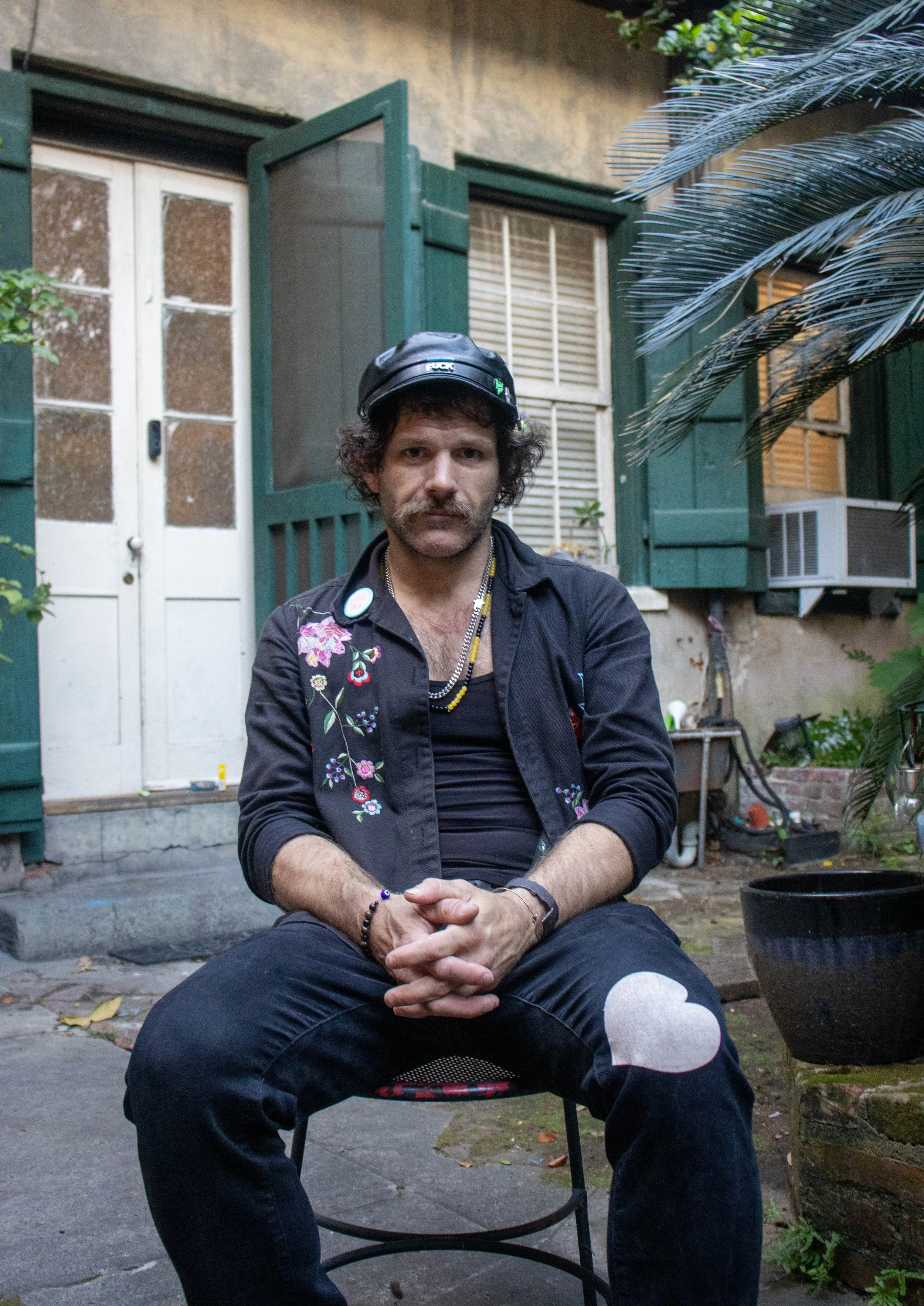
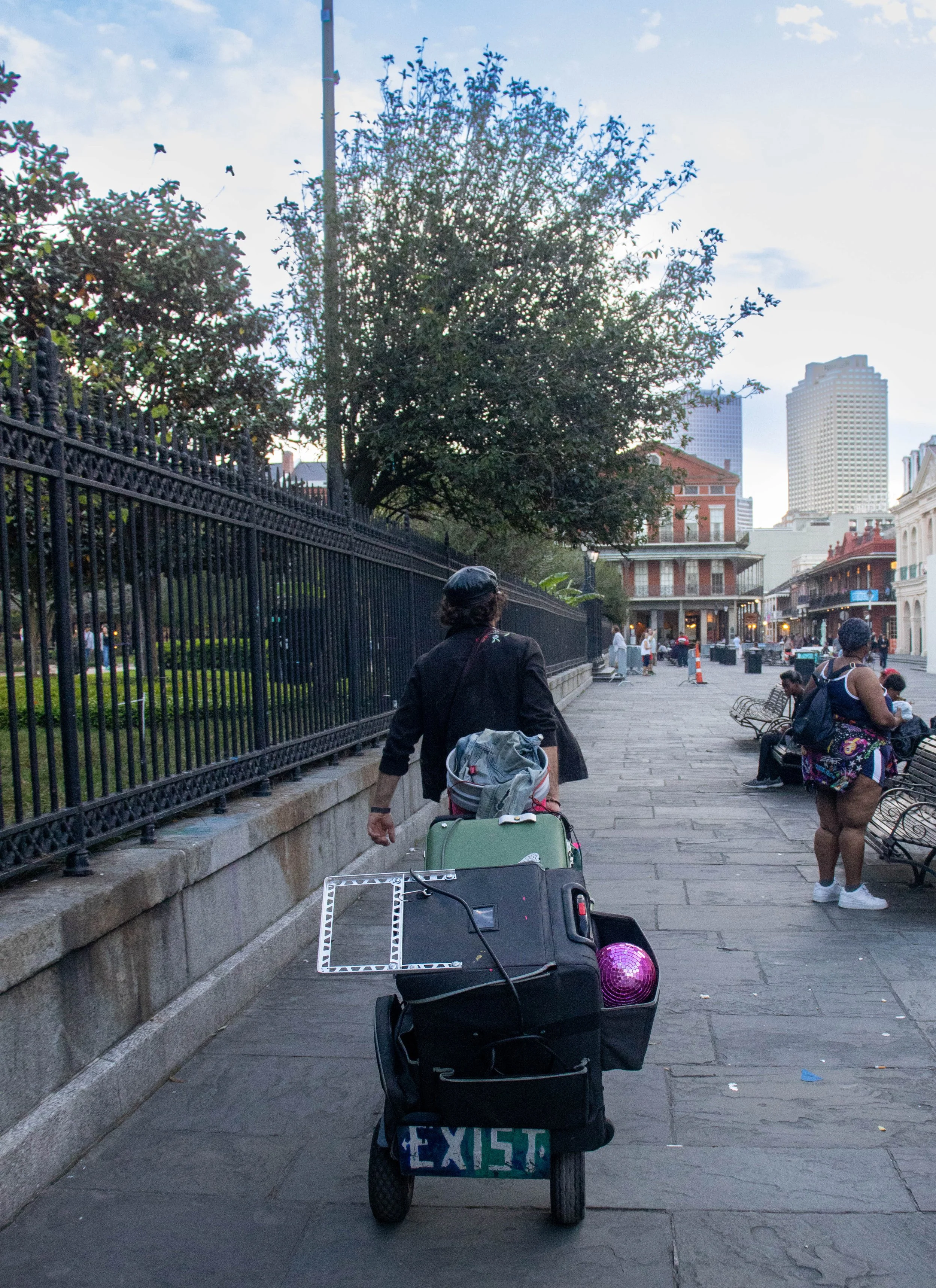
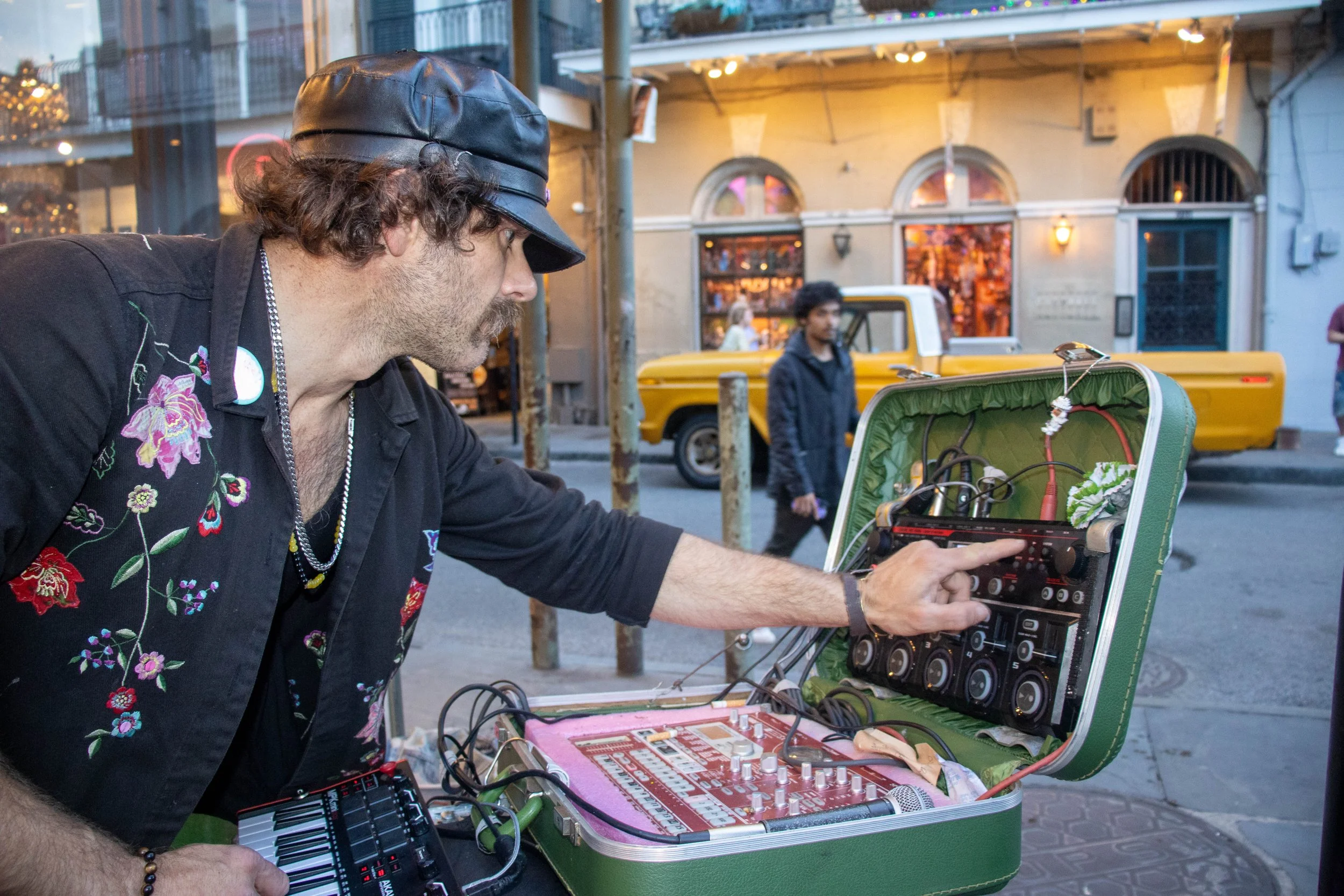
Gabriel Paul sets up his instrument: a vintage hard-shell case retrofitted with a mixer and MIDI keyboard, which he brings to all of his performances on April 10, 2026.
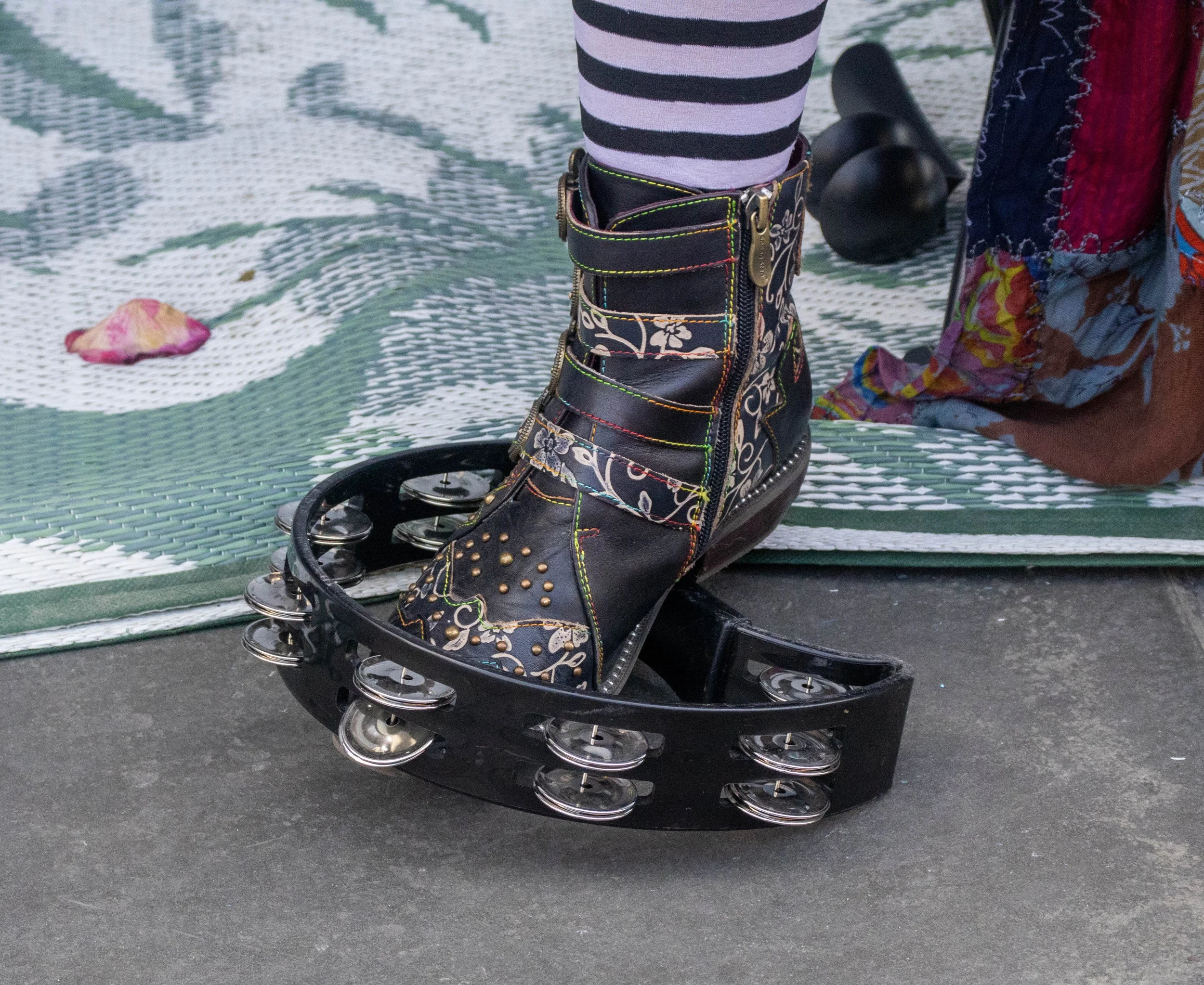
Vixi Vale plays the tambourine with her left foot during her performance with Roxy Doll on April 10, 2026.
Through visits both day and night, on weekends and weekdays, at the French Quarter Festival, and on a quiet night, I have seen many different sides of street performing. I took tighter portraits or detail shots of instruments or playing fingers, while also examining more open areas, like Jackson Square, where many people perform and hang out.
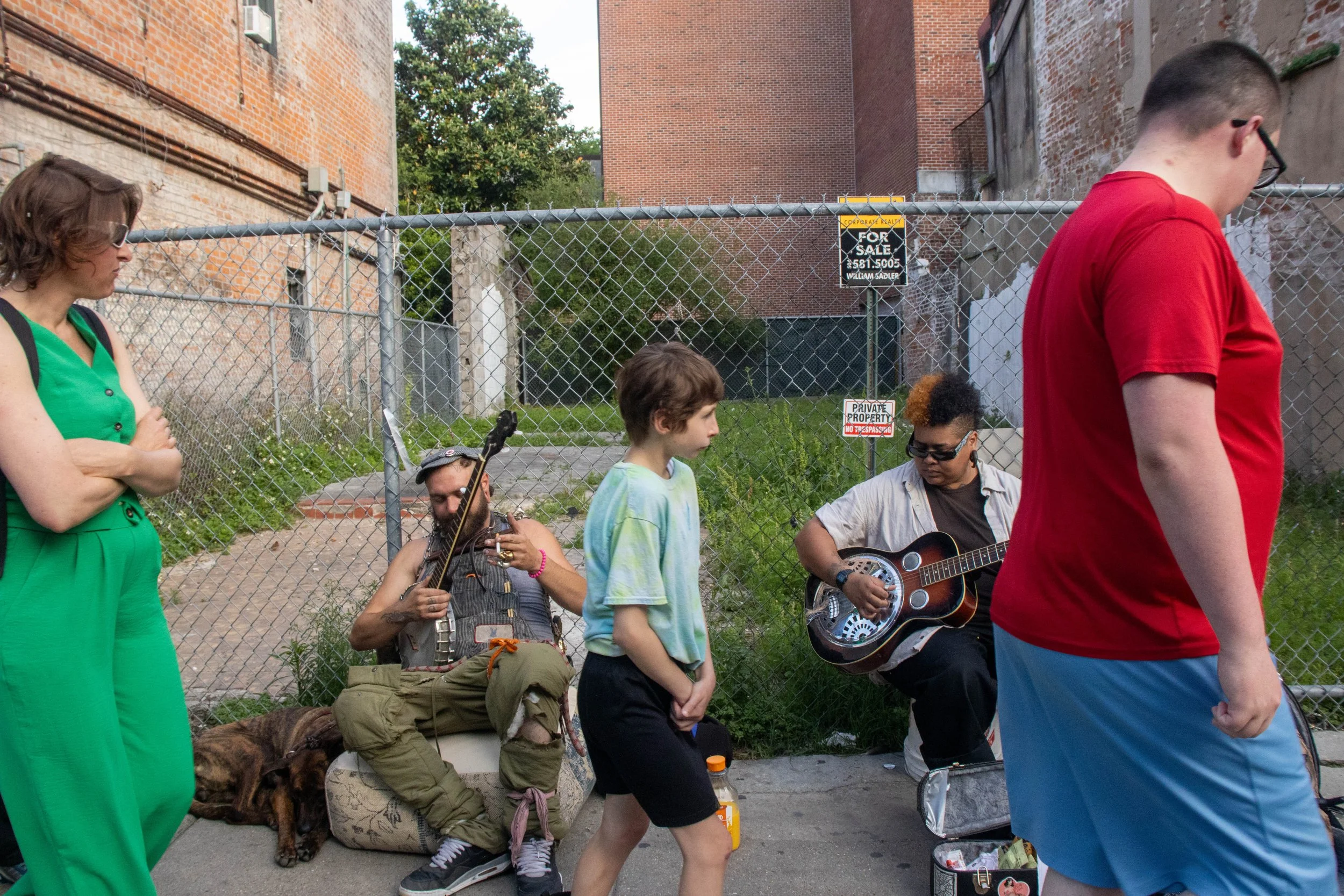
Breakfast (left) plays the banjo with Xen Heathen on a resonator guitar as a tour group passes by on Royal Street on April 10, 2026.
Street performance is an example of democracy at work: you can say or do whatever you want, with full creative freedom. There is no algorithm blocking you from being heard, nor is there a ticket to pay for. Music becomes a public entity, something everyone deserves access to, not only those who can afford it. Street performance keeps our community connected, one voice at a time.
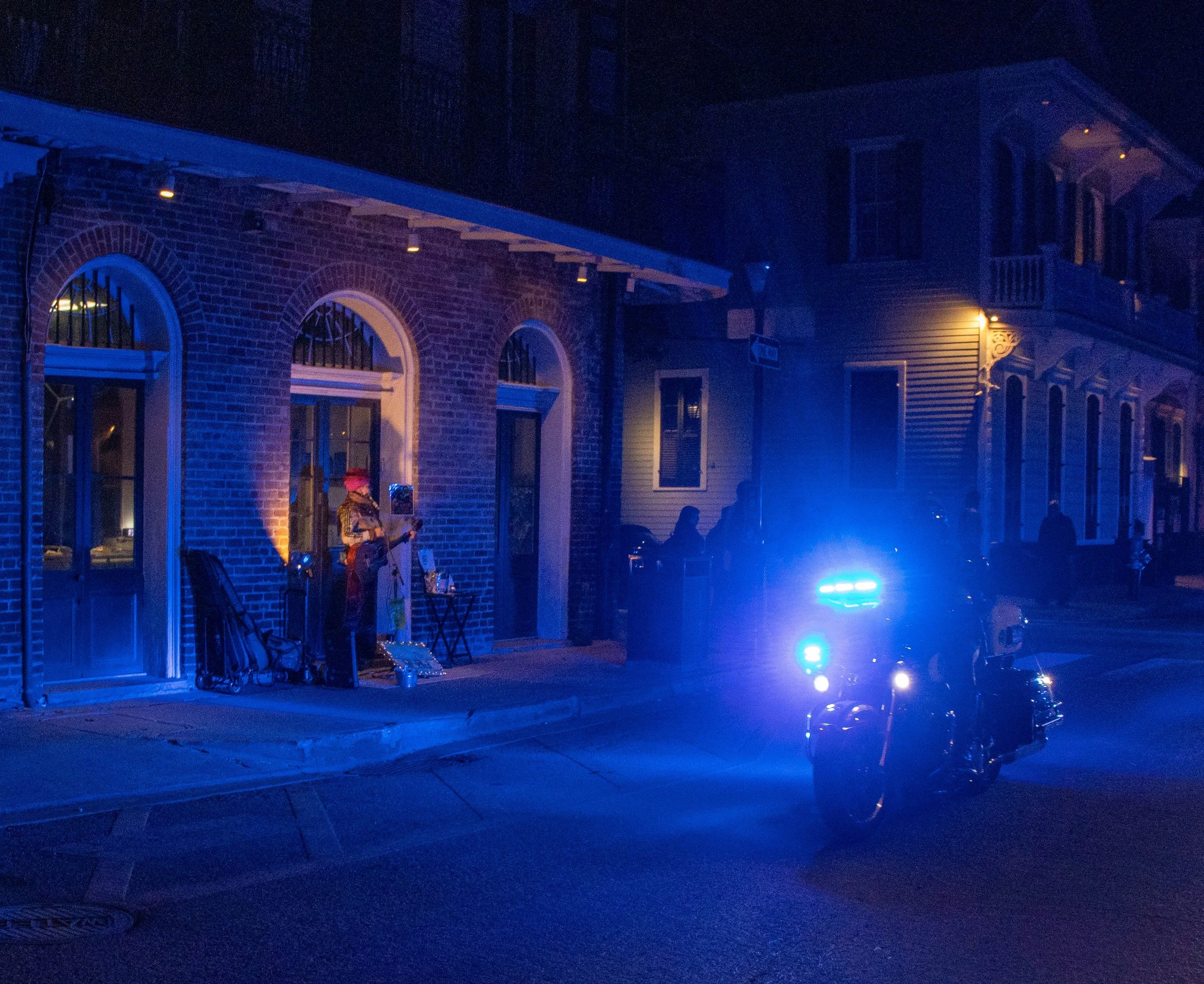
Sariya Idan sings on Royal Street as a NOPD motorcycle passes by on March 13, 2026.